Never the Wrong Weather - March 17, 2026
- Jennifer Dowd

- Mar 19
- 3 min read

I was once told by a friend, “It’s never the wrong weather only the wrong gear.” I’m still not entirely convinced that applies to wildlife photography, but I do try to live by it.
So when I saw a report online about green violet swallows at a local sanctuary, I grabbed my gear, scooped up my adventure cat Finn, and headed out. It was dark and stormy, the kind of sky that looks like it could open up at any moment—but I was determined.
This time, instead of rushing, we wandered.
There were no swallows waiting for us, but what I received instead felt like a gift. Out of nowhere, a river otter appeared. I’ve visited this sanctuary many times and had never seen one there before. Watching it move so effortlessly through the water was incredible, one of those rare, grounding moments that pulls you fully into the present.

The river otter is often seen as a symbol of joy, playfulness, and emotional flow.
But more deeply, otters are messengers of:
Letting go of heaviness
Trusting the flow of life
Reconnecting with simple joy, even after grief
They live between worlds—land and water. Spiritually, that represents the balance between:
the practical world (what we’re doing, achieving, planning)
and the emotional/spiritual world (what we’re feeling, healing, processing)

Did you know?
River otters can hold their breath for up to 8 minutes and are incredibly playful, often using the same slides along riverbanks over and over again.

Not long after, I noticed a small marsh wren perched on a bullrush. She was gently pulling soft fluff, clearly gathering materials for her nest. I’ve never managed to capture a photo of a marsh wren that I truly loved… until now. And I realized something in that moment—because I had slowed down, she had too.

Did you know?
Marsh wrens build multiple “dummy nests” in addition to their main nest scientists believe this may help confuse predators or attract mates.


Once I settled into that slower pace, the entire world around me seemed to open up. I began noticing the details lichen clinging to branches, soft moss underfoot, and delicate water lily flowers resting quietly on the surface.

Then I heard it that familiar chirp. I turned, and suddenly it was towhee, towhee, towhee. They seemed to appear all at once. Because I wasn’t rushing, they stayed long enough for me to capture several portraits something that rarely happens when I’m moving too quickly.


Did you know?
Spotted towhees use a distinctive “double-scratch” technique to forage, hopping backward and scratching the ground to uncover seeds and insects.

Then BOOM the unmistakable sound of a hummingbird. I looked up to see it perched high on a branch, calmly surveying its territory… its “hummer hood,” as I like to call it. I had to laugh. There’s something so powerful about watching such a tiny bird hold its space so confidently.
Did you know?
A hummingbird’s heart can beat over 1,000 times per minute, especially during flight, making them one of the most energetically intense birds in the world.

As we made our way back, small golden-crowned sparrows were chirping softly, searching for leftover seeds on the ground. One cheeky little one paused, turned, and gave me the cutest over-the-shoulder look. It felt like a quiet goodbye.

Did you know?
Golden-crowned sparrows migrate between Alaska and British Columbia, and their song is often described as sounding like “Oh dear me,” giving them a gentle, almost melancholic tone.

Just as Finn and I reached the car, the sky finally opened and the rain poured down. Perfect timing.
All of this, an otter, a marsh wren, towhees, a hummingbird, and a sparrow—in less than an hour.
I went out looking for swallows, but I found something far more meaningful. A reminder that when we slow down, when we truly take the time to look, nature reveals itself in the most unexpected ways.
And every single time it’s worth it.


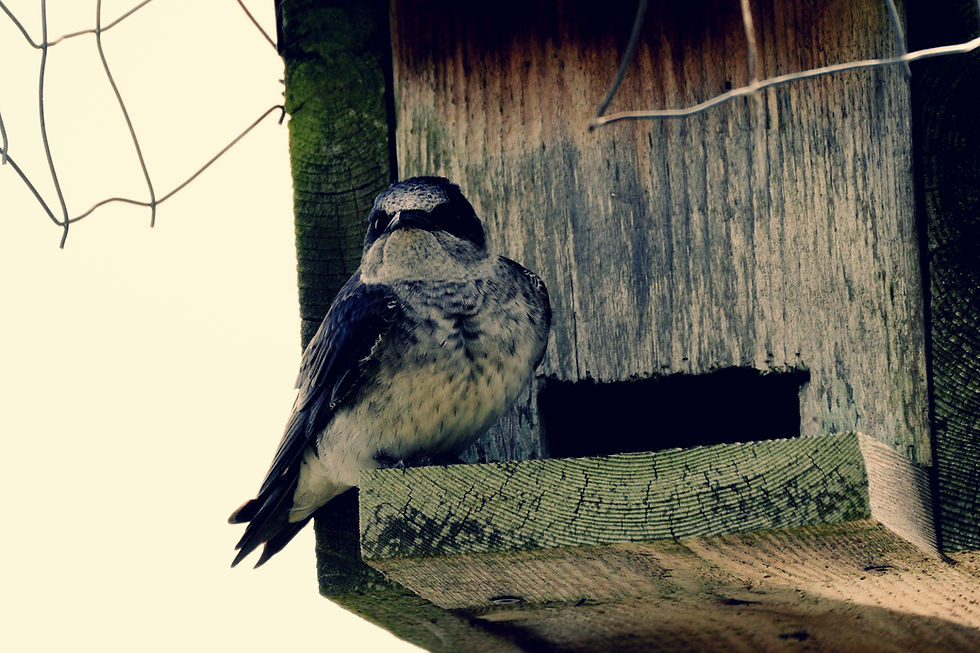
It's the unexpected that makes a trip so worthwhile.
Agreed