The Day the Puffballs Called Me Outside - Feb 19, 2026
- Jennifer Dowd

- Feb 21
- 3 min read

It started the way many of the best wildlife moments do, accidentally.
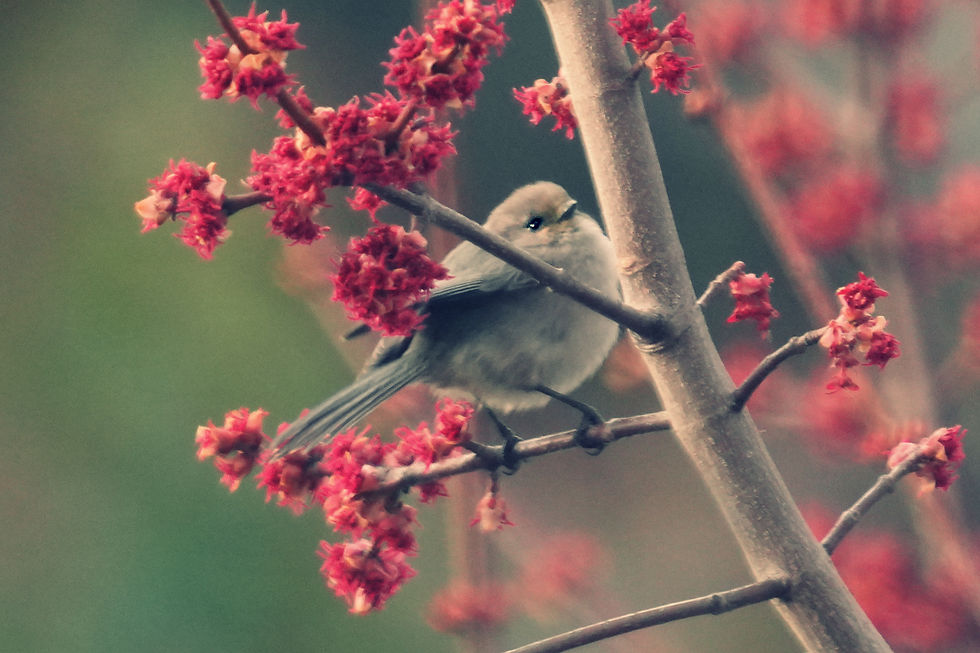
I glanced out my apartment window and noticed tiny balls of fluff flitting wildly through a tree that looked ready to burst with early life. They were moving so fast it was almost impossible to track them, bouncing from branch to branch like living sparks. I’d seen these little birds around before but never stopped to identify them. That is, until I checked eBird later and discovered something exciting.
They were Bushtits.
My first ones.

Did You Know?
Bushtits are among the smallest songbirds in North America and often travel in lively family flocks. In winter, they huddle together for warmth — sometimes dozens at a time — forming a tiny living blanket against the cold.

Somehow and this always amazes me, they seemed to know I was photographing them. One turned and looked directly at me, tiny eyes meeting mine as if to acknowledge the moment.
How do they always know?


That brief connection gave me a sudden burst of energy. Despite the freezing after-work air waiting outside, I grabbed my lens and headed out into the evening.
The urban wild did not disappoint.
Along the coastline, I spotted the silhouette of a kingfisher perched against the fading glow of the setting sun. Suspended between sea and sky, it was one of those quiet moments that makes you stop and breathe a little deeper.

Further along, Hooded Mergansers drifted across the water, the males with their striking crests escorting their companions like feathered nobles moving through their evening court.


Did You Know?
Hooded Mergansers are expert divers. Instead of filtering water like many ducks, they hunt underwater for fish and aquatic insects — using their serrated bills to grip slippery prey.


And then like a familiar friend I saw him.
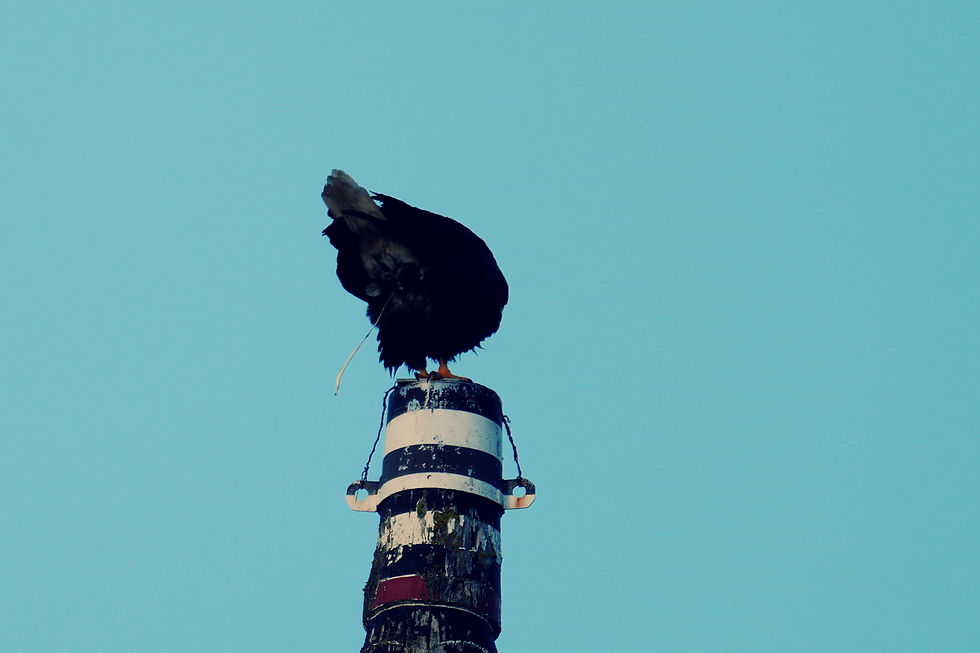
My local Bald Eagle....Shark Feather. Because really… he’s a shark of the sky. With feathers. (Had to be said.)

He watched over the shoreline from above, a quiet reminder of the powerful presence that shares our city skies.
And this is what he thought of me taking his picture...classic! LOL.
Down by the tidepools, life moved at a different pace. Tiny shorebirds darted between rocks and shallow water, probing the wet sand for food. It was a mix of Dunlins and Black Turnstones, working side by side in what felt like peaceful cooperation.


No competition. Just coexistence.
Did You Know?
Dunlins migrate thousands of kilometres each year and rely heavily on coastal stopovers like our local shorelines to refuel. Black Turnstones, meanwhile, get their name from their habit of flipping stones and seaweed to find hidden insects and crustaceans.


As I drove further along the coast, I encountered another quiet urban resident, a female deer. She stood calmly as I rolled down my window, offering a curious glance. She wasn’t afraid. Because I was in her neighbourhood. She’s used to us.
Did You Know?
Urban deer often adjust their behaviour to live alongside people. Studies show they may become more nocturnal or tolerant of human presence in order to safely share space.

And then came the moment that felt like a reunion.
A Great Blue Heron.

They had been absent for weeks, and seeing one again felt grounding. He stood tall on a drainage runoff as the sky behind him turned a dusty pink. His still presence drew attention, people paused, quietly appreciating the shared beauty of the scene.
For a few moments, strangers stood together, united by stillness.
Did You Know?
Great Blue Herons are incredibly patient hunters. They can stand motionless for long periods before striking with lightning speed to catch fish or small prey.

Evenings like this are reminders that peace isn’t always found far away.
Sometimes it’s right outside our window.
In the trees.
In the tidepools.
Along the roadside.
Standing beneath a pink sky.
Wildlife lives beside us — not somewhere else.
And that’s exactly why caring for the wild matters.
Because when we protect nature, we protect our neighbours.


What wonderful neighbors to have.
It takes all kinds - even the smallest have a part to play in this world.