When Winter Still Sings - Feb 3, 2026
- Jennifer Dowd

- Feb 3
- 4 min read
After a long day of sitting at my desk, I did the one thing my body and spirit were quietly asking for: I grabbed my 600mm lens, my adventure cat Finnegan, and my Aunt, and we went for a walk.

It was very, very overcast—late afternoon, deep winter grey. The kind of light that usually whispers don’t expect much. And honestly, I didn’t. It’s winter. Most migratory birds have moved on, and expectations were set intentionally low.
We headed into a local urban nature sanctuary tucked into a neighborhood. We haven’t walked there in a while, and it felt like time.

The air was alive with sound. Brewer’s Blackbirds, American Robins, sparrows, blackbirds—so many voices layered together it felt like the season had skipped ahead. Songs echoed from every direction. I stopped walking and just listened. How could this be winter?
The first little bird I encountered was a Savannah Sparrow.

Small, soft, and beautifully understated, Savannah Sparrows are grassland birds often overlooked—but once you notice them, you can’t unsee them. That delicate yellow stripe above the eye is like a tiny sunbeam, especially against a grey day. She looked at me with a very clear expression that said, Where’s my seed?
I laughed.
Sorry, birdie. No seed today.
As we continued, the lake opened up in front of us—absolute glass. Not a ripple in sight. And that’s when I heard it.

A high-pitched, rolling song cut through the air, sharp and musical. A Marsh Wren burst into view, perched and singing with its whole tiny body. Marsh Wrens may be small, but their voices are anything but. They sing to defend territory and attract mates, often delivering rapid, bubbling songs that feel impossibly big for such a little bird.


It felt… magical.
And then—BAM.
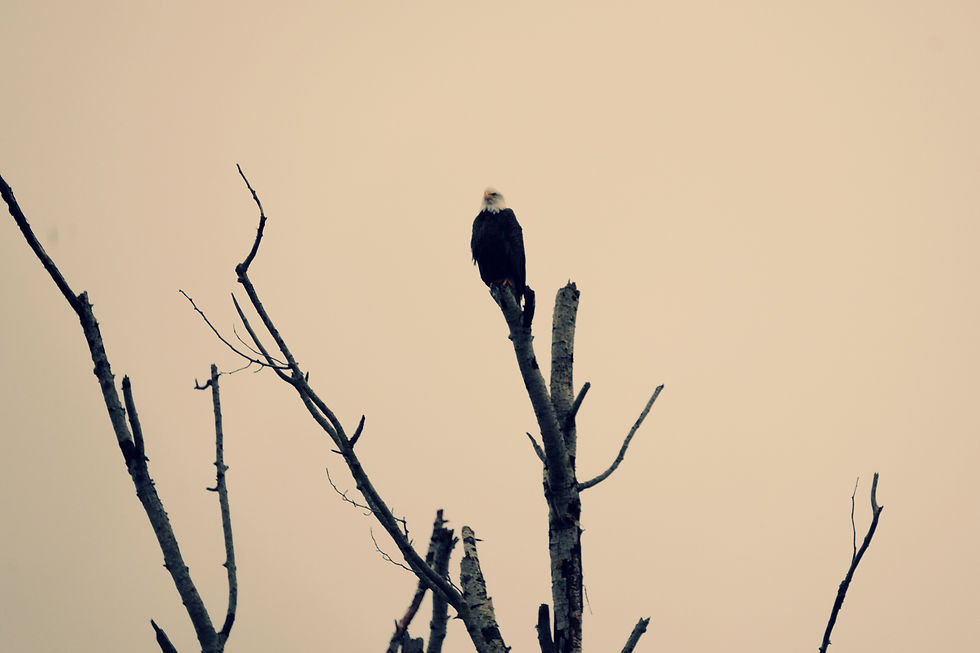
Two Bald Eagles flew overhead, wings cutting through the grey sky. I instinctively lifted my camera and managed to catch one mid-flight before watching where they landed, far across the lake. We headed in that direction, curiosity pulling us forward.

They were perched high in the trees, branches everywhere, light flat and unforgiving. Not ideal conditions—too many limbs, too much grey, and very little detail reaching the sensor. Still, I snapped a few frames. Sometimes the photo isn’t about perfection. Sometimes it’s about bearing witness.


Did you know?
Bald Eagle are increasingly choosing urban nature sanctuaries as resting and hunting spots. These protected green spaces often provide exactly what eagles need: tall mature trees for perching, open water for spotting fish, and reduced human disturbance compared to surrounding neighborhoods. Eagles frequently use city sanctuaries as daytime roosts—places to rest, preen, and survey the landscape—especially during winter when food sources like fish and waterfowl are easier to find in unfrozen urban lakes and estuaries.
On the water below, a lone Lesser Scaup female glided silently across the lake—the only duck on the surface. Her rich chocolate-brown feathers blended beautifully with the muted tones of the day.
Lesser Scaups are exceptional divers.

Did you know.....
They can dive several meters underwater to feed on aquatic plants, insects, and mollusks, using powerful legs positioned far back on their bodies—perfect for swimming, awkward for walking. Watching them disappear beneath the surface always feels like watching a secret unfold.

As we continued, two hummingbirds suddenly zipped into view, chattering, chasing, and fearlessly standing their ground against birds much larger than themselves. I love hummingbird bravery. They weigh less than a loonie and behave like they own the place.


And just when I thought the walk had given all it had to offer, I looked down.
Mushrooms were growing from a fallen log, their rings painted in layers of colour—quiet, intricate, alive.

Mushrooms are the unseen backbone of healthy ecosystems. They break down dead wood, recycle nutrients back into the soil, support plant growth, and form underground networks that allow trees to share resources and communicate. Without fungi, forests—and wetlands—would struggle to survive. Life rebuilding life, quietly.
Just as we were winding down the walk, I looked down and spotted this—bright, jelly-like mushrooms glowing against the muted browns of winter branches. Finds like this always feel like nature whispering, look closer.

This type of jelly fungus thrives on decaying wood, quietly doing essential work. Even in winter, fungi are busy breaking down fallen branches, returning nutrients to the soil, and supporting the entire ecosystem from the ground up. What looks small—or even strange—is actually part of a vast, unseen network keeping forests and wetlands alive.
It was a reminder that life doesn’t pause just because the skies are grey. Sometimes, the most vibrant stories are happening right at our feet.
Not far from the mushrooms, I noticed a burst of colour clinging to the bark of a tree—vivid greens and fiery oranges glowing quietly in the low winter light. Moss like this often goes unnoticed, but it’s one of the most resilient life forms in our forests and urban green spaces.

Mosses help retain moisture, protect tree bark, prevent erosion, and create tiny habitats for insects and microorganisms. They thrive in damp, shaded places, turning stillness into life. Even in winter, when much of the landscape feels muted, moss continues its slow, steady work—holding water, softening edges, and reminding us that growth doesn’t always look loud or fast.
Standing there, camera in hand, I felt grounded. Another reminder that if we slow down enough, entire worlds reveal themselves on the smallest scale.
Each outing teaches me something, regardless of whether the photos turn out the way I imagined. I tuned out the noise of the world and tuned into my meditative practice: photographing birds, talking to myself, wondering what each animal was thinking.
That walk lasted only an hour.
One hour—and look at what revealed itself inside an urban wildlife sanctuary nestled within a neighborhood. Winter didn’t feel empty. It felt alive. All I had to do was show up.


Woody Allen once said that just showing up is 90% of living. And to your credit,you keep showing up. Good on you.
Came upon these quiet observances while querying info on the winter migrations of various egret species. It was a wonder-filled detour. Thanks!