The Reward for the Chase: Sea Lions, Roe, and a Rainbow in Lantzville - March 13, 2026
- Jennifer Dowd

- Mar 15
- 5 min read
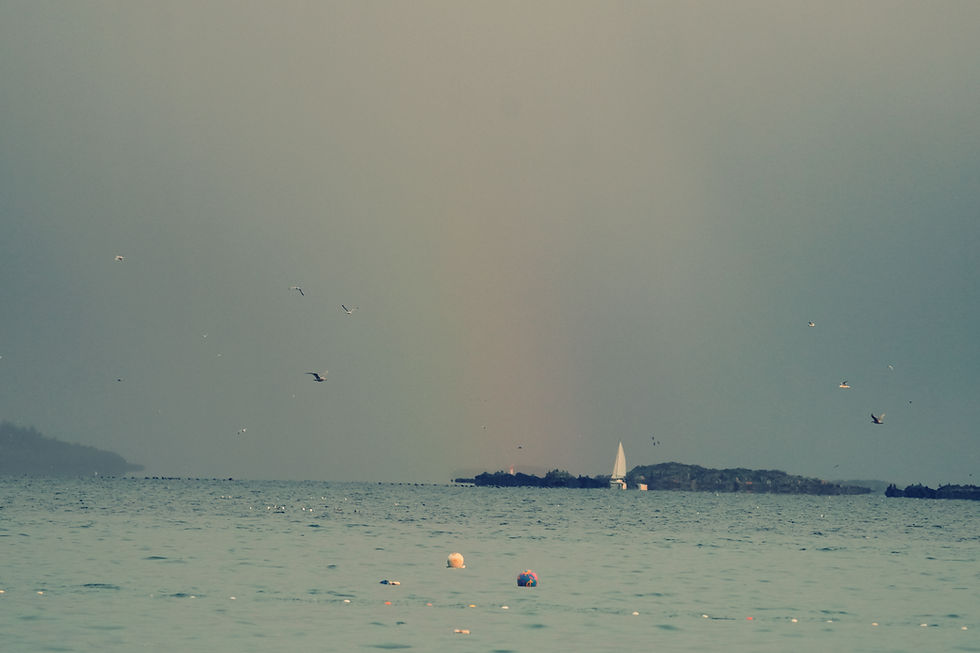
We checked out of the hotel at 6:00 AM on the final day of our trip.
By this point we were tired, frozen, and completely soaked from the past two days of chasing the herring spawn up and down the coast. But we were also determined. Based on the latest reports I had found, the most recent sightings of herring activity were near Lantzville, so we decided to make one final stop before heading home.
When we arrived at the beach, it was immediately clear that something was happening.

The water was filled with commercial fishing boats, and surrounding them were dozens of California sea lions surfacing and diving, barking loudly as they tried to grab what they could from the frenzy below. Above them, seagulls filled the sky, their calls echoing across the bay as they circled the boats and scanned the water.

The entire shoreline felt alive with movement and sound.
California sea lions travel north along the Pacific coast during winter and early spring, and the herring spawn is one of the richest feeding opportunities they encounter. When massive schools of herring gather near shore to reproduce, predators quickly follow. Sea lions are powerful, agile hunters and can easily dart through schools of fish, grabbing mouthfuls as the herring crowd the shallow water.
While my eyes were focused on the sea lions and the boats, I suddenly looked down at the beach in front of me and realized something incredible.
There they were. Herring. For the first time in my life, I was seeing Pacific herring up close.
Their bodies shimmered in the morning light, a silvery blue color with delicate cross-hatched patterns across their sides. Even in stillness, they looked almost iridescent, reflecting the early colors of the sunrise.
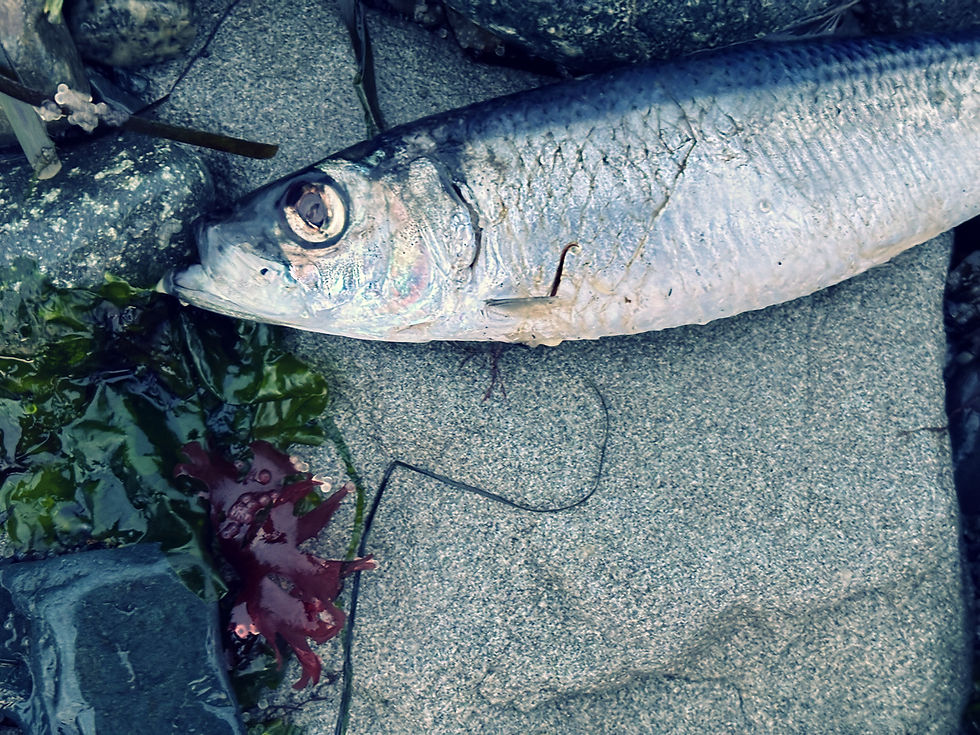
Underneath them, scattered along the beach and mixed in with the seaweed, were clusters of roe herring eggs another clear sign that spawning had taken place along this shoreline.
Did You Know?
Pacific herring are small fish, usually about 20–25 centimeters long, but they are one of the most important species in the coastal ecosystem. During spawning, a single female can release tens of thousands of eggs, which attach to seaweed and eelgrass in shallow water. These eggs become a vital food source for birds, fish, seals, sea lions, and even whales.
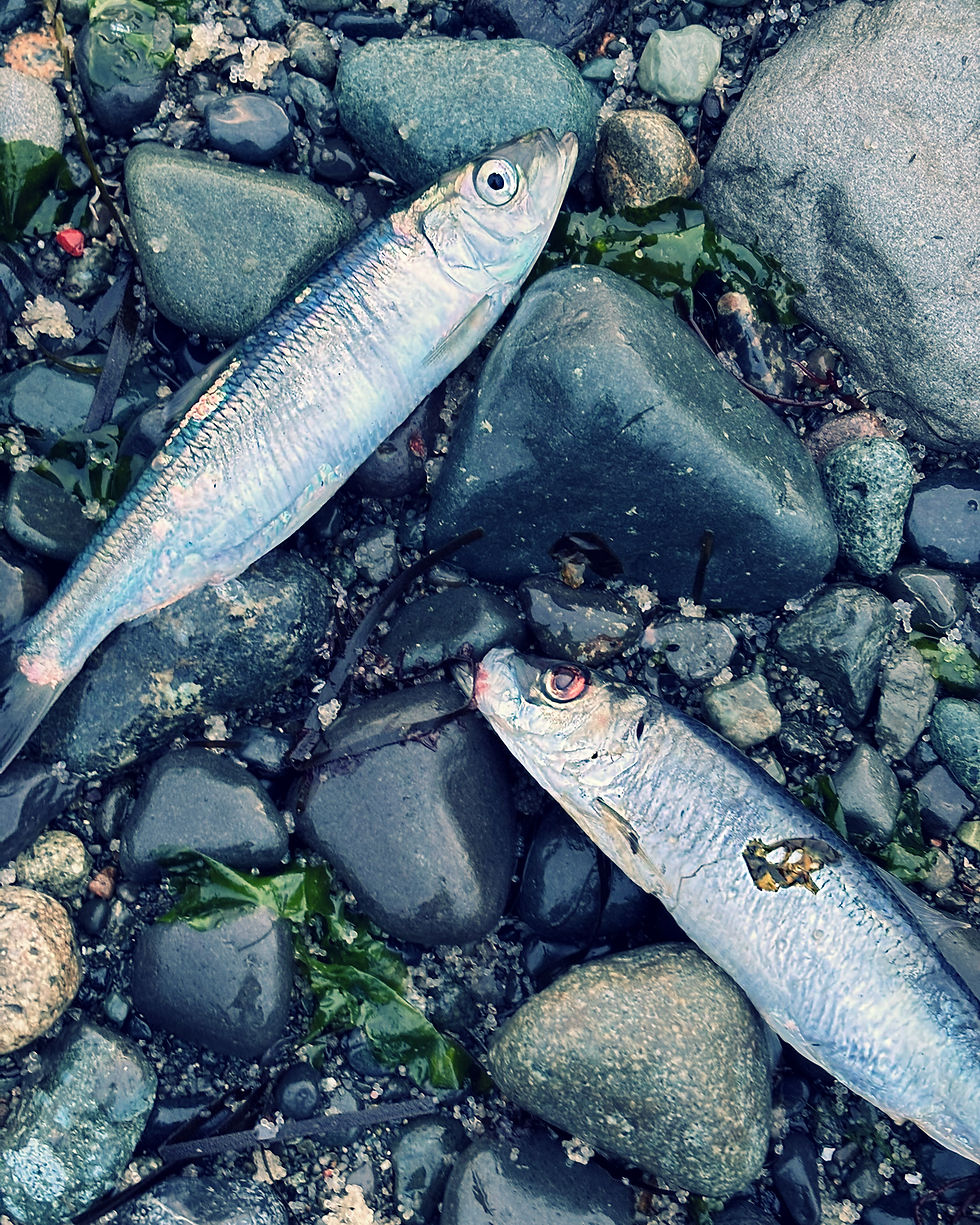
Standing there, I couldn't help but think that these herring had completed their purpose, contributing to the next generation before continuing the endless cycle of life in the ocean.
We had arrived just in time for sunrise, and despite the chaos around us, we paused for a moment to take it all in.
Slowly, the sun began to rise above the horizon, painting the sky in gold, orange, and soft yellow light. Rain drifted through the air, and the sea lions continued barking in the distance while the fishing boats moved steadily through the water.

It was one of those moments where everything feels completely alive all at once.
Even with the noise of engines and birds, we stood there mesmerized by the sunrise closing out our three-day adventure.

Eventually my attention shifted to the fishing boats. Watching the fishermen work was fascinating, but there was also a quiet sadness knowing that many of these herring would soon be gone. The sea lions certainly weren’t missing the opportunity they were in a full feeding frenzy, surfacing and diving repeatedly as they grabbed what they could.
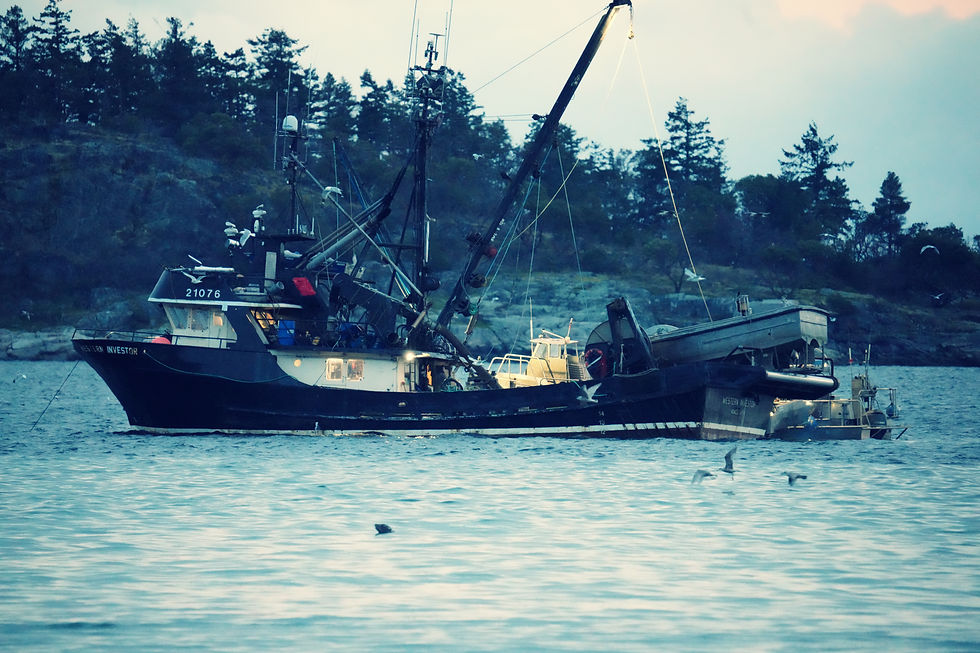

Although I had hoped to see some sea lions resting along the shoreline, that didn’t happen this time. Instead, they stayed mostly in the water, weaving through the boats and surfacing unexpectedly between the waves.
I did manage to capture a few portraits.
At one point I managed to take a photo of a sea lion just as it popped its head above the water and looked straight at me. The expression was pure curiosity — or possibly a quick evaluation of whether I might be holding snacks. For a brief moment it felt like we were both studying each other, each wondering what the other was doing there.


Did you know?
California sea lions are highly social animals and often gather together in groups called rafts, especially when resting or waiting for feeding opportunities.
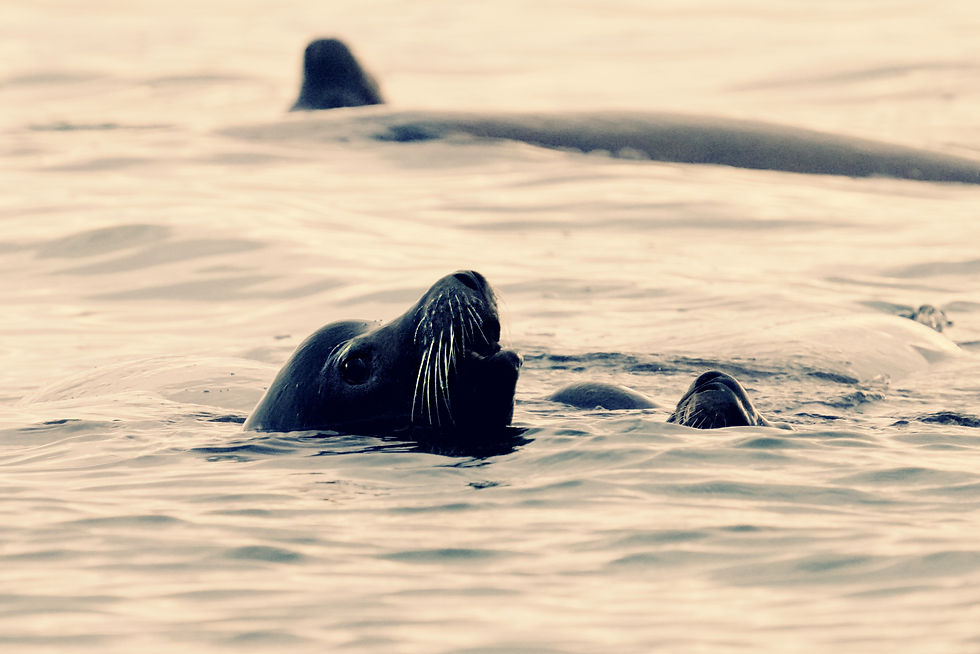
At one point I noticed a group of sea lions huddled tightly together in the water. Their heads and bodies bobbed side by side in a floating cluster that looked suspiciously like a sea lion cuddle party. Maybe they were sharing warmth, maybe they were waiting their turn for the next fish but whatever the reason, it looked like a very cozy strategy for surviving a cold coastal morning.
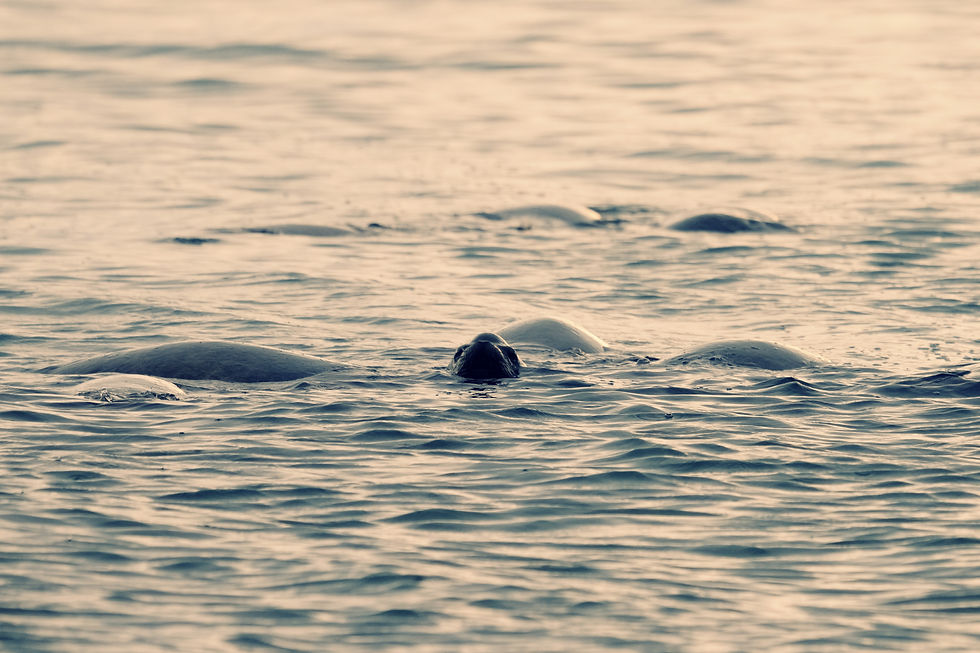
Including one particularly athletic sea lion that leapt clean over a floating marker buoy, clearly trying to avoid a boat that passed a little too close.

Of course, Finnegan came along for the adventure as well. With the rain, cold, and all the commotion, I kept him safely tucked in his backpack instead of letting him explore the beach. He seemed perfectly content riding along, watching the world from his cozy spot. Finn has become quite the little travel companion, enjoying the hotel, the car rides, and even these early morning wildlife adventures.

In the middle of all the chaos, something unexpected caught my eye.
A single Grebe. Just one. Floating calmly in the water while fishing boats, sea lions, and seagulls surrounded it on all sides. It almost looked like the bird had wandered into the scene and was quietly wondering what exactly it had gotten itself into.


And then, just as the morning light strengthened, I looked up and spotted a hawk flying across the dark sky, silhouetted against the rising sun.

The shape of its wings cut cleanly through the storm clouds as it glided across the horizon.

It was the perfect final moment.
After three days of searching the coast — from French Creek to Bowser, Denman Island to Hornby Island, we had finally seen what we came for.
Not the famous turquoise water of a massive herring spawn, but something just as meaningful.
Sea lions feeding.
Herring along the shore.
Roe scattered among the seaweed.
Birds gathering in the chaos.
And a sunrise over the Salish Sea.

Sometimes nature gives you exactly what you expected. And sometimes it gives you something different, something quieter, more subtle, but just as beautiful. On a cold, wet, stormy morning in Lantzville, the ocean finally revealed its reward for the chase.

BONUS
On our way through the area, we made a quick stop at Rathtrevor Beach, and to my surprise the park had one more wildlife moment waiting for us.
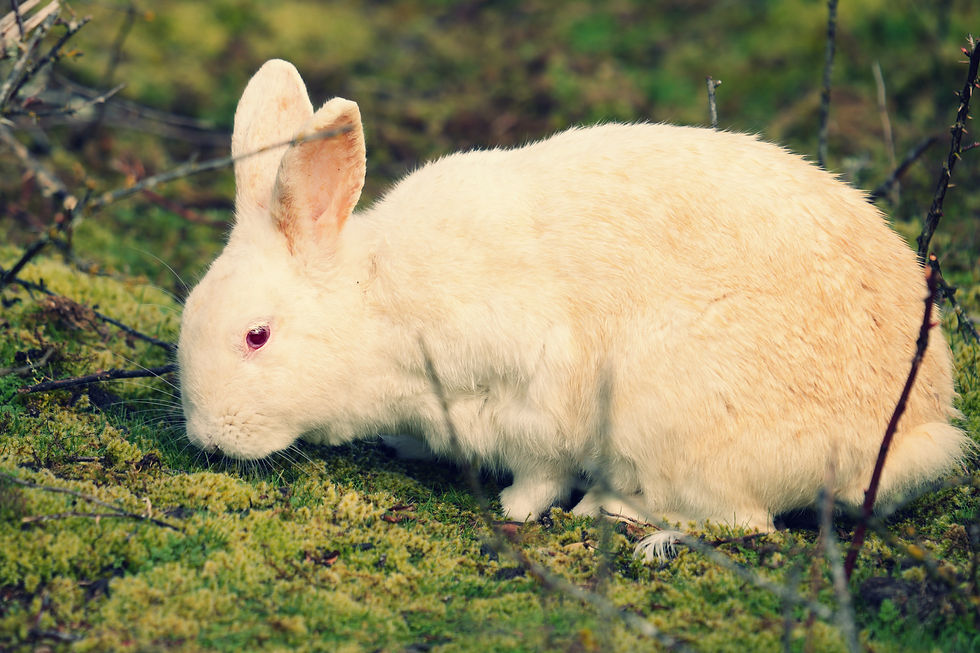
Wild bunnies. Several of them were darting through the grassy areas near the beach, running, stopping, and then hopping off again like tiny bursts of energy. One in particular caught my eye — a blonde rabbit with bright red eyes, something I had never seen before.
Nearby was another rabbit with black and dark brown fur and deep brown eyes, quietly watching the activity around it.
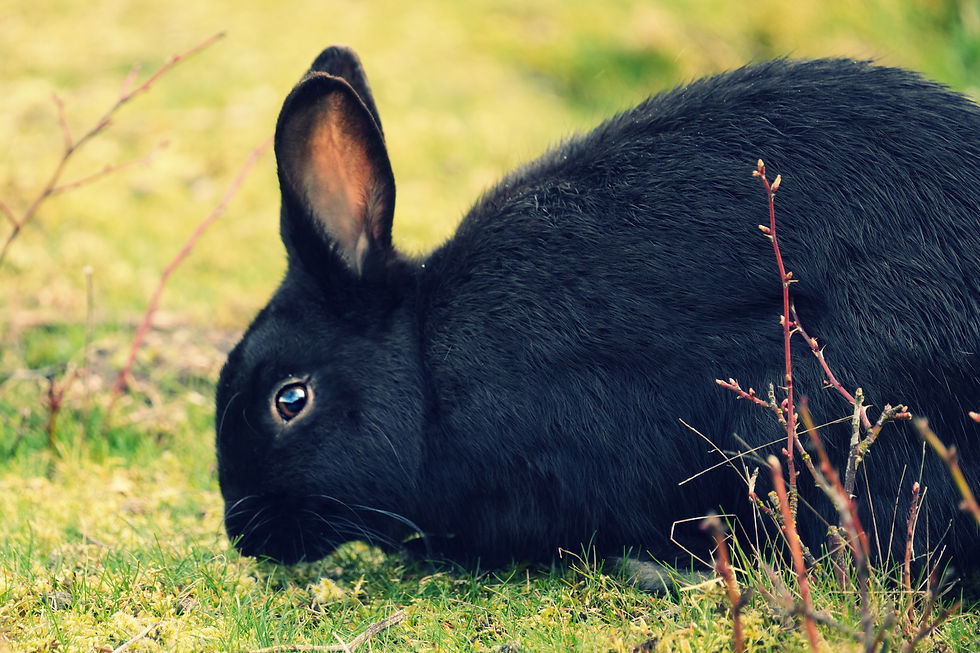
It was an incredible moment to see them up close, playing and exploring the park.
While these rabbits look adorable, they are actually considered an invasive species at Rathtrevor Provincial Park. Domestic rabbits were introduced years ago and their populations have grown, which can impact native plants and ecosystems in the park. Still, watching them run across the grass and chase each other around was one of those unexpected wildlife moments that reminds you how much life can appear in the most surprising places.


Expected or unexpected, all worthwhile.
To me the highlight was the wild bunnies--totally surprising.